



Auditeurs:
Meilleurs auditeurs :
00:00
00:00
volume_up
chevron_left
-
play_arrow
Radio Funk : Webradio Disco, Funk, Soul and Boogie 80
-
 play_arrow
Radio Funk Live Radio Funk
-

54
play_arrowWe Are The World (feat. Al Jarreau, Anita Pointer, B. Midler, Billy Joel, Bob Dylan, Bob Geldof, Bruce Springsteen, Cyndi Lauper, Dan Aykroyd, Daryl Hall, Diana Ross, Dionne Warwick, Harry Belafonte, Huey Lewis and the News, Jackie Jackson, James Ingram, Jeffrey Osborne, John Oates, June Pointer, Kenny Loggins, Kenny Rogers, Kim Carnes, La Toya Jackson, Lindsey Buckingham, Lionel Richie, Marlon Jackson, Michael Jackson, Paul Simon, Randy Jackson, Ray Charles, Ruth Pointer, Sheila E., Smokey Robinson, Steve Perry, Stevie Wonder, Tito Jackson, Tina Turner, Waylon Jennings & Willie Nelson) [Remastered]
The Michael Joseph Jackson Discography
He remains one of the most iconic and influential figures in the history of popular music.
Born on August 29, 1958, in Gary, Indiana, and passing away on June 25, 2009, in Los Angeles, California, he revolutionized the music industry over nearly forty‑five years of career.
Nicknamed the “King of Pop”, he has sold over one billion albums worldwide, ranking among the three best‑selling recording artists of all time alongside the Beatles and Elvis Presley.
His album Thriller (1982) remains the best‑selling album in history, with over 100 million copies sold worldwide.
Family origins and childhood in Gary, Indiana
Michael Jackson was born at Mercy Hospital in Gary, the seventh of ten children.
His father, Joseph Walter Jackson (“Joe”), born on July 26, 1928, in Fountain Hill, Arkansas, worked as a crane operator in a steel mill in this working‑class Indiana city.
His mother, Katherine Esther Scruse, from Alabama, married Joe in 1949.
The family lived in a modest two‑room house at 2300 Jackson Street, in a Black neighborhood of Gary.
Michael’s childhood was marked by the extremely strict discipline imposed by his father.
A former amateur boxer, Joe had been raised by an abusive father himself and reproduced this pattern of violence with his own children.
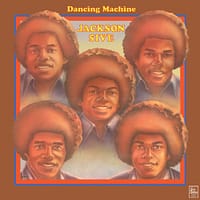
Daily rehearsals of the Jackson Brothers, who would later become the Jackson 5, took place in an atmosphere of fear and tension.
Joe would beat his sons with his belt at the slightest mistake, while their mother, Katherine, remained helpless.
Michael, the smallest and most sensitive child, suffered especially from this abuse.
His father also mocked his physical appearance, calling him “big‑nose”—a trauma that profoundly marked the artist and influenced his later relationship to cosmetic surgery.
Despite this difficult context, Katherine Jackson recalled that Michael was a bright, mischievous, and different child.
Surrounded by music, the Jackson children sang from an early age.
Joe, who had previously formed a blues band with his brother, The Falcons, without ever breaking through, decided to build a group around his sons.
With his rare singing and dancing talent, young Michael was chosen as the group’s frontman despite his age.
The Jackson 5 saga and the road to stardom (1963–1971)
Originally called “The Jackson Brothers”, the group was formed in 1963.
It consisted of Jackie, Tito, Jermaine, Marlon, and Michael, accompanied by two seasoned musicians: Johnny Jackson on drums and Ronnie Rancifer on keyboards.
The group gave their first professional show in 1963 at a Gary nightclub, for an 8‑dollar paycheck.
Under Joe’s strict supervision, the children performed in clubs, talent shows, and even strip clubs.
In 1968, a crucial encounter changed the Jackson family’s destiny.
Bobby Taylor, a Motown artist, noticed the group and arranged an audition for the legendary Detroit label founded by Berry Gordy.
On August 29, 1968, Joseph Jackson and his children traveled to Detroit for the audition.
Berry Gordy, immediately captivated by the young Michael’s charisma and talent, decided to sign the group.
The Jackson Five moved to California, temporarily staying at Berry Gordy’s home and later at Diana Ross’s house.
On October 7, 1969, their first single, “I Want You Back”, became a phenomenal hit.
The Jackson 5 then unleashed a string of successes: “ABC”, “I’ll Be There” (1970), “Mama’s Pearl”, and “Never Can Say Goodbye” (1971).
With his sharp, emotive voice and natural charisma, Michael quickly became the group’s undisputed star.
At just eleven years old, he was already an international superstar.
Early solo career at Motown (1971–1975)
Alongside the Jackson 5, Michael also launched a solo career at Motown in 1971.
On October 7, 1971, his first solo single, “Got to Be There”, was released and became a Top 5 hit.
His first solo album, simply titled Got to Be There, followed in January 1972.
In 1972, the song “Ben”, from the soundtrack of the film of the same name, became his first solo number‑one and earned him a Golden Globe plus an Oscar nomination.
This ballad about the friendship between a boy and his pet rat revealed the young Michael’s uniquely sensitive vocal style.
The albums Music & Me (1973) and Forever, Michael (1975) did not achieve the same level of success.
At the same time, the Jackson 5’s status began to decline.
In 1975, tensions emerged between the group and Berry Gordy over artistic freedom and royalties.
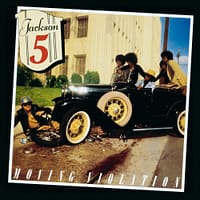
On May 28, 1975, the Jackson 5 left Motown for Epic/CBS, becoming simply “The Jacksons”(Motown kept the rights to the name “Jackson 5”).
Jermaine, married to Berry Gordy’s daughter, chose to stay at Motown and left the group temporarily.
Meeting Quincy Jones and the making of Off the Wall (1978–1979)
In 1977, Michael Jackson took a role in The Wiz, an Afro‑American reimagining of The Wizard of Oz, starring Diana Ross.
It was on this set that he met Quincy Jones, who was in charge of the film’s music direction.
That chance meeting would prove decisive for his career.
At 19, Michael was searching for a producer to launch his true solo career as an adult.
Quincy Jones, the legendary jazz musician, arranger, orchestrator, and film composer, agreed to produce his next album.
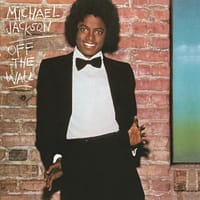
The Off the Wall recording sessions ran from December 4, 1978, to June 3, 1979, mainly at Cherokee and Westlake Studios in Hollywood.
Jones brought in his trusted engineer Bruce Swedien, who would work on all of Michael’s future albums.
A stellar lineup of musicians participated: keyboardist Greg Phillinganes, drummer John “JR” Robinson, percussionist Paulinho Da Costa, and guitarist David Williams.
Released on August 10, 1979, three weeks before Michael’s 21st birthday, the album opened with the single “Don’t Stop ’Til You Get Enough”, a self‑written disco‑funk masterpiece characterized by soaring falsetto and signature vocal quirks.
It shot straight to number one on the Billboard charts.
“Rock With You” became another massive hit.
Off the Wall blended disco, funk, soul, and pop with a sophistication never heard before.
It sold over 20 million copies worldwide and established Michael Jackson as a major solo artist.
The album marked his transformation from child prodigy into the future King of Pop.
Critics noted that this record captured “the metamorphosis of a child into an artist, of a voice into a vision.”
Thriller: peak and global phenomenon (1982–1983)
After the success of Off the Wall, Michael and Quincy Jones set out to craft an even more ambitious album.
The sessions were intense, marked by their relentless perfectionism.
Determined to refine his dance steps, Michael isolated himself and rehearsed for hours, sometimes straining his relationship with Quincy Jones.
The pair also spent countless hours remixing each track, never satisfied with the first mix.
Thriller was released on November 30, 1982, on Epic Records.
The nine‑track album explored post‑disco, soul, funk, rock, R&B, and pop, creating a genre‑defying hybrid sound.
The first single, “The Girl Is Mine”, a duet with Paul McCartney, was released in October 1982.
Though not universally praised, the second single, “Billie Jean”, instantly catapulted Michael to the top of the charts in numerous countries.
On March 25, 1983, Michael Jackson debuted the moonwalk on live television during the Motown 25: Yesterday, Today, Forever special, in front of 47 million American viewers.
Wearing his black sequined jacket, white socks, and a single sequined glove, he executed a move that would become his signature.
The moonwalk, inspired by older steps like the “backslide,” was perfected and popularized by Jackson into a smooth, gliding illusion.
Thriller quickly became a cultural phenomenon.
The album stayed at number one on the Billboard 200 for 37 weeks and remained in the Top 10 for its first 80 weeks.
It spawned seven Top 10 singles: “Billie Jean”, “Beat It” (featuring Eddie Van Halen’s legendary guitar solo), “Thriller”, “Wanna Be Startin’ Somethin’”, “Human Nature”, “P.Y.T. (Pretty Young Thing)”, and “The Girl Is Mine”.
The “Thriller” music video, directed by John Landis, revolutionized the form.
This 14‑minute mini‑film, with a multi‑million‑dollar budget, spectacular special effects, and an iconic zombie choreography, turned the music video into a cinematic work.
It became the only music video ever selected for the National Film Registry of the Library of Congress.
The album won eight Grammy Awards in 1984, more than any previous album.
Worldwide sales of Thriller have surpassed 66 million units, and by 2015 it was certified 30× Platinum in the US, the first album in history to reach that status.
Thriller definitively elevated Michael Jackson to the status of global icon and planet‑wide superstar.
Bad: asserting his dominance (1987)
After the colossal triumph of Thriller, expectations for Michael’s next album were stratospheric.
The Bad recording sessions began in January 1985 and ran until July 1987, spanning over two and a half years.
It was the third and final album produced in collaboration with Quincy Jones.
Michael reportedly wrote around sixty songs and recorded thirty‑three, initially wanting to release a triple album.
Bad was finally released on August 31, 1987, with a sound that was more aggressive and more urban, blending funk, rock, and synthetic textures.
Michael wrote and co‑produced every track except two.
The album tackled themes like media scrutiny, paranoia, racial profiling, romance, and world peace.
The standard edition includes ten tracks: “Bad”, “The Way You Make Me Feel”, “Smooth Criminal”, “Man in the Mirror”, “Dirty Diana”, “Another Part of Me”, “I Just Can’t Stop Loving You” (duet with Siedah Garrett), “Liberian Girl”, and “Speed Demon”.
Nine of them were released as singles, setting a new industry record.
The “Smooth Criminal” video, inspired in part by Fred Astaire’s “Girl Hunt Ballet” in The Band Wagon, became one of Michael’s most iconic.
It introduced the anti‑gravity lean, a 45‑degree forward tilt made possible by specially designed shoes and extraordinary muscle control.
Although Bad did not match Thriller’s sales figures, it still sold over 35 million copies worldwide.
The Bad World Tour, launched in 1987, broke attendance records and generated massive revenue.
Dangerous: the New Jack Swing era (1991)
For his eighth studio album, Michael decided to part ways with Quincy Jones after more than a decade of collaboration.
He discovered New Jack Swing, a genre fusing hip‑hop and R&B, and hired Teddy Riley, one of its pioneers, as co‑producer.
Engineer Bill Bottrell and Bruce Swedien completed the core team.
Dangerous was released on November 25, 1991, after over four years of silence since Bad.
The album marked a clear artistic shift, with a sound focused on socially conscious themes and a broader sonic palette.
During the sessions, Michael reportedly recorded more than fifty songs, but the final version includes 14 tracks.
The album blends New Jack Swing, gospel, rap, hard rock, and even classical elements (in the opening of “Will You Be There”).
Most of the singles became major international hits:
-
“Black or White” (with a controversial video)
-
“Remember the Time”
-
“In the Closet”
-
“Who Is It”
-
“Jam” (featuring Heavy D)
-
“Heal the World”
-
“Give In to Me” (with Slash on guitar).
“Black or White”, released on November 14, 1991, stunned the world with its groundbreaking morphing sequence and a cameo from Macaulay Culkin.
“Heal the World”, Michael’s most cherished song, echoed his humanitarian concerns.
Recorded with children’s voices, this gentle ballad reflected his fight against child hunger around the world.
The Dangerous World Tour, launched in 1992, grossed around 100 million dollars.
With Dangerous, Michael proved he could evolve with the times, absorbing new musical currents while keeping his unique identity.
The album has sold over 32 million copies worldwide.
HIStory: A Double Album Between Retrospective and Resilience (1995)
The mid‑1990s were a turbulent period for Michael Jackson.
The 1993 allegations of child abuse against him, although settled out of court, seriously damaged his public image.
On a personal level, he took antidepressants and other medications, his marriage to Lisa Marie Presley, Elvis’s daughter, proved short‑lived, and his physical appearance continued to change dramatically.
HIStory: Past, Present and Future – Book I, his ninth studio album, was released on May 1, 1995.
It is an ambitious double album.
The first CD, “HIStory Begins,” compiles fifteen of his greatest hits.
The second, “HIStory Continues,” contains fifteen tracks, fourteen of them previously unreleased.
The album title plays on the words “His story” (“his story”) and “History,” reflecting Michael’s desire to etch his musical legacy in stone.
The record explores darker, more personal themes than his previous albums.
“Scream,” an energetic duet with his sister Janet Jackson, opens the album with a music video that held the record for the most expensive ever made (over 7 million dollars).
“Earth Song,” one of the album’s most powerful tracks, addresses Michael’s humanitarian, animal‑rights, and ecological concerns.
“They Don’t Care About Us,” despite controversy over its lyrics, became an anthem against social injustice.
“Stranger in Moscow” reveals the loneliness and isolation he felt in the face of fame.
HIStory sold over 20 million copies worldwide, becoming the best‑selling double album of all time.
The HIStory World Tour (1996–1997) attracted millions of fans across the globe.
Invincible: The Final Studio Album (2001)
Six years after HIStory, Michael Jackson released Invincible on October 30, 2001.
It is his tenth and final studio album during his lifetime, and his sixth solo album on Epic Records.
With an estimated production budget of 55 million dollars, it became one of the most expensive albums ever made.
The album blends contemporary R&B, pop, and elements of New Jack Swing.
Michael collaborated with a wide range of producers, including Rodney Jerkins, Teddy Riley, and R. Kelly.
The first single, “You Rock My World,” released on August 24, 2001, was an instant hit in Europe and Australia and reached number one in France.
However, its success was more mixed in the United States and Japan.
Only three singles were officially released from the album:
-
“You Rock My World,”
-
“Cry” (a song on the same humanitarian theme as “Heal the World,” but without a video due to a conflict with Sony),
-
“Butterflies” (released without promotion or a video).
The tensions between Michael Jackson and Sony Music over the album’s promotion became public.
Despite the difficult context of the September 11, 2001 attacks and the weak promotion, Invincible sold over 10 million copies worldwide.
Critics were divided: some praised several tracks such as “Unbreakable” (featuring The Notorious B.I.G.), “Heartbreaker,” “Break of Dawn,” and “Speechless,” while others judged the album underwhelming compared to Jackson’s earlier standards.
Invincible marks the end of Michael Jackson’s studio discography.
He passed away on June 25, 2009, at the age of 50, only weeks before the planned launch of his “This Is It” concert series in London.

Collaborations and Studio Work Methods
The collaboration with Quincy Jones
The professional relationship between Michael Jackson and Quincy Jones remains one of the most fruitful in the history of music.
Their collaboration spans three major albums: Off the Wall (1979), Thriller (1982), and Bad(1987).
Quincy Jones, whom Michael met on the set of The Wiz in 1977, became far more than just a producer: he was also a collaborator, adviser, close friend, and a kind of substitute father figure.
As one biographer noted:
“Quincy Jones the producer becomes, for Michael Jackson, Quincy Jones the collaborator, the adviser, the friend and the substitute father.”
During this decade‑long partnership, the two men shaped the sound of an era, side by side with sound engineer Bruce Swedien.
Their working method blended tradition and innovation.
As Michael explained:
“What I do is that I write the song and the music, and Quincy comes in and brings out the best in me.”
Recording sessions were intense and sometimes contentious.
Michael recalled:
“We argued about certain things. When we fought, it was always about the avant‑garde stuff, the latest technology.”
Quincy constantly pushed Michael to exceed his limits, even when the singer wanted to explore new sonic territories.
Their relationship eventually ended in court in 2013, when Quincy Jones sued over royalties for the use of tracks from Bad and Thriller in the film This Is It and was awarded 9.4 million dollarsin damages.
Bruce Swedien and the “Acusonic Recording Process”
Bruce Swedien, the legendary sound engineer, worked with Michael Jackson on all his major albums from Off the Wall onward.
He developed a special technique called the “Acusonic Recording Process”, a method designed to capture the authenticity and warmth of Michael’s voice.
As Swedien explained:
“I decided to record every song in analog first. The sound of 24‑track analog is very warm and musical. It captures the music with great realism.”
Each sound source was recorded on two tracks in real stereo, using techniques such as the Blumlein method with two bidirectional microphones placed at 90 degrees to create the stereo image.
To capture Michael’s voice, Swedien favored technical approaches and studio strategies that preserved the singer’s intimate, natural expressions as faithfully as possible.
He used special microphones, analog recordings, and elaborate techniques to shape vocal “prisms,” while crafting naturally resonant acoustic spaces.
As one expert put it:
“Every element was deliberately chosen in the service of Bruce Swedien’s quest for authenticity, blending tradition and technology in turn.”
For the HIStory album, Swedien used innovative methods, applying Acoustic Sciences Corporation Tube Traps in unconventional ways to control the acoustics of large recording studios.
He followed a systematic yet intuitive approach, carefully sculpting the balance, spatial placement, and stereo image of each track so that it matched the musical theme.
Michael Jackson’s major artistic collaborations
Beyond Quincy Jones and Bruce Swedien, Michael Jackson collaborated with a wide range of top producers, arrangers, and musicians—Rodney Jerkins, Teddy Riley, Bill Bottrell, R. Kelly, The Notorious B.I.G., and many others—constantly blending his vision with fresh sonic perspectives.
Many of you probably want this text to slot into a “Studio Warriors” or “The Making Of”‑style section for your page Michael Jackson: The Complete Discography; if you want, I can now give you a much shorter summary (2–3 paragraphes) tailored as an intro‑blurb, or a tight list of key collaborators + album + groove style (e.g., Off the Wall = Quincy Jones + Bruce Swedien → disco‑funk‑pop).
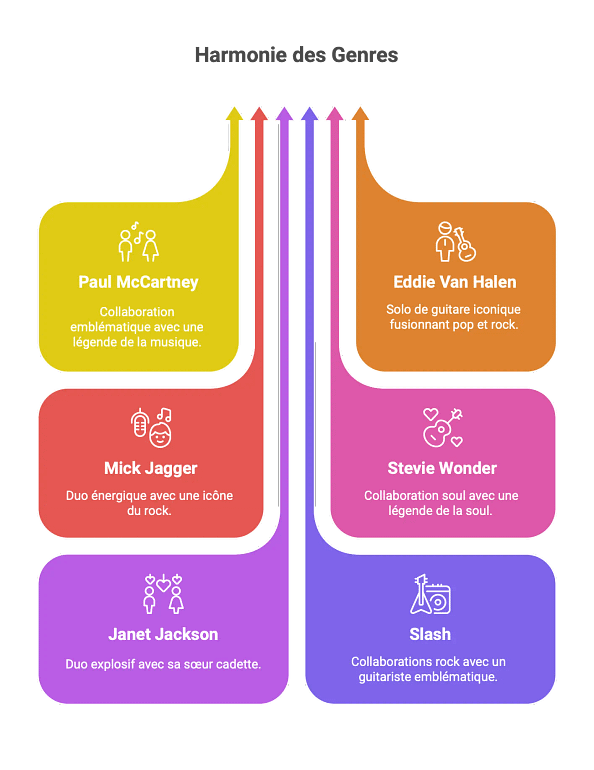
Michael Jackson’s major collaborations
Michael Jackson collaborated with many prestigious artists throughout his career. Among the most striking collaborations:
Paul McCartney
These two legends recorded “The Girl Is Mine” (1982) for the Thriller album and “Say Say Say” (1983) together.
These duets achieved massive commercial success and symbolized the meeting of two generations of music icons.
Eddie Van Halen
The legendary guitarist played the iconic solo on “Beat It” (1982). On Quincy Jones’s advice, Michael Jackson wrote “Beat It” as a crossover “come‑on” record aimed at a white rock‑oriented audience.
Eddie Van Halen’s unforgettable guitar line created a perfect fusion between Jackson’s pop and soaring hard‑rock electricity.
Mick Jagger
The Rolling Stones frontman collaborated with Michael on “State of Shock” (1984), an energetic track from the Jacksons’ Victory album.
Stevie Wonder
Michael recorded “Just Good Friends” (1987) with the soul legend, blending his slick pop‑funk style with Wonder’s deep soul‑R&B feel.
Janet Jackson
Michael’s younger sister starred in the explosive duet “Scream” (1995), accompanied by a video that set a record for the most expensive music video ever made.
Slash
The Guns N’ Roses guitarist collaborated multiple times with Michael, notably on “Give In to Me” (1993) and “D.S.” (1995).
The Notorious B.I.G.
The iconic rapper appeared on “This Time Around” (1995) and “Unbreakable” (2001), bridging Michael’s sound with the golden‑era US hip‑hop wave.
We Are the World and USA for Africa (1985)
One of Michael Jackson’s most important collaborations remains “We Are the World,” recorded in 1985 to raise funds against the famine in Ethiopia.
He co‑wrote the charity song with Lionel Richie, co‑produced by Quincy Jones and Michael Omartian.
The project brought together 45 of the most famous artists of the time, including:
Lionel Richie, Stevie Wonder, Paul Simon, Kenny Rogers, James Ingram, Tina Turner, Billy Joel, Diana Ross, Dionne Warwick, Willie Nelson, Bruce Springsteen, Kenny Loggins, Steve Perry, Daryl Hall, Bob Dylan, Ray Charles, Cyndi Lauper, and several members of the Jackson family.
The recording took place on January 28, 1985, right after the American Music Awards, at A&M Recording Studios in Hollywood.
Quincy Jones famously had this sign placed at the studio entrance: “Check your egos at the door.”
The song was released on March 7, 1985, and became a global commercial phenomenon, selling over 20 million copies and raising more than 63 million dollars for humanitarian aid.
It won three Grammy Awards, an American Music Award, and a People’s Choice Award.
Michael Jackson’s vocal techniques
Michael Jackson’s voice is renowned for its exceptional versatility and mastery of different registers.
His range spanned from E1 to G♯4 without relying heavily on falsetto.
Contrary to a common misconception, he did not primarily sing in falsetto but shaped his chest voice (M1) to create that iconic tone.
As one vocal analyst explains:
“One of the biggest myths (especially from the classical school) is that he sings mostly in falsetto, which is not true. His iconic sound was in his M1 (chest register), but he shaped his voice differently. Songs like ‘The Way You Make Me Feel,’ ‘Will You Be There,’ ‘Remember the Time’ would sound completely different if he sang in falsetto in the A4–C5 range. They wouldn’t have that energy he brought to them.”
Michael trained daily with Seth Riggs, a renowned voice teacher who taught him the Speech Level Singing technique.
The exercises focused on achieving a smooth, even vocal tone across his entire range, eliminating breaks and color shifts between registers.
His techniques also included masterful falsetto, vocal growls, vocal hiccups, vibrato, airy head voice, screams, and vocal distortion.
A specialist notes: “He was able to add distortion, grain, or a powerful tone in the top of the fifth octave.”
His pitch precision was legendary, and his breath control allowed him to craft these distinctive vocal effects.
Top 10 most iconic Michael Jackson songs
Based on rankings by critics, fans, and sales, here is a selection of the ten most emblematic tracks of Michael Jackson’s career:
-
Billie Jean (1982) – The standout track from Thriller, with its hypnotic bassline and irresistible funk‑disco groove. Often described as “sinuous, paranoid, and omnipresent,”this song coincided with the debut of the moonwalk, which became Michael’s signature move. Many fans still consider it the number‑one song of his career.
-
Thriller (1982) – The title track of the best‑selling album of all time, paired with a groundbreaking video directed by John Landis. This track marks Michael’s peak on every front: dance, voice, and stage presence. The clip, with its dancing zombies and special effects, reportedly sent a wave of shock through the family‑oriented audience of Michel Drucker’s Champs‑Élysées when it aired.
-
Beat It (1982) – A masterpiece of fusion between pop and hard rock, featuring the legendary solo by Eddie Van Halen. The song performs “a perfect fusion between Michael’s pop touch and those electric rock‑metal swoops.”
-
Smooth Criminal (1987) – A track co‑produced by Michael Jackson and Quincy Jones, famous for its haunting refrain “Annie, are you okay?” and the iconic anti‑gravity lean in the video. The Fred‑Astaire‑style choreography, with the white suit and fedora, remains one of Michael’s most striking visual performances.
-
Man in the Mirror (1987) – A powerful anthem about personal and social change, regarded by many as the best song of his career. “For me, this is really number one,” says one critic. This gospel‑tinged ballad, without artifice, reveals Michael in his purest vocal form.
-
Black or White (1991) – A blend of pop, rock, and rap, with a legendary video directed alongside Macaulay Culkin. The revolutionary morphing sequence and Michael’s final transformation into a panther made the clip a landmark moment in music‑video history.
-
Don’t Stop ’Til You Get Enough (1979) – Michael’s first true solo masterpiece, a high‑class disco‑funk track that fundamentally changed the face of pop music in 1979. The masterful use of falsetto and signature vocal tics make this an all‑time classic.
-
Earth Song (1995) – A song of protest against environmental destruction, touching on humanitarian, animal‑rights, and ecological themes. Its beautiful, memorable melody, paired with a majestic video, has cemented its status as a must‑have classic.
-
Heal the World (1991) – The song Michael was most proud of, written to fight child hunger. This gentle ballad, recorded with children’s voices, delivers the universal message: “Heal the world, make it a better place, for you and for me and the entire human race.”
-
Rock With You (1979) – A sensual disco‑soul gem from Off the Wall, which showcases Michael’s ability to craft irresistible melodies and sophisticated arrangements. This track helped establish him as a major solo artist.
The evolution of his appearance and cosmetic surgery
The evolution of Michael Jackson’s appearance has fascinated the public and fueled intense debate throughout his career.
The most discussed part of his cosmetic journey concerns his series of rhinoplasties.
In 1979, Michael fell while shooting the “Off the Wall” video and claimed his nose was broken, leading to his first rhinoplasty.
However, his sister La Toya Jackson contradicted this account, saying he was self‑conscious about his nose and repeatedly declared: “It’s too big, I want it redone.”
This obsession stemmed from the trauma inflicted by his father, Joseph Jackson, who mocked him with the nickname “big nose,” a label that haunted the King of Pop for life.
“His nose had become an obsession,” confirmed Pamela Lipkin, a rhinoplasty specialist.
Experts estimate that Michael underwent at least six major rhinoplasties and several smaller secondary procedures.
His biographer J. Randy Taraborrelli writes that Michael had his first rhinoplasty in 1979, another between 1983 and 1984, a third about three years later, and a fourth in 1986.
Over time, the structure of his face kept changing.
Surgeons speculate that he may have had a forehead lift, cheekbone surgery, and lip alterations.
In his 1988 autobiography Moonwalk, Jackson confirmed that, in addition to the two rhinoplasties, he underwent surgery to create a dimple in his chin.
From 1986, he became a regular client of dermatologist Arnold Klein, a specialist in soft‑tissue fillers.
Regarding his skin lightening, Michael revealed that he suffered from vitiligo, a chronic condition causing loss of skin pigmentation.
Although some suggested that cosmetic treatments helped even out his skin tone, Jackson himself stated that vitiligo was the main cause of his changing appearance.
This transformation in his complexion became one of the most controversial aspects of his public image.
His final look, after numerous cosmetic interventions, appeared almost sculpted and surreal.
Jackson’s autopsy reportedly revealed a scar beside his nostrils, a scar behind each ear, and two scars on his neck, “probably” from cosmetic surgery, as well as cosmetic tattoos on his eyebrows and lips.
To hide defects from the surgeries, he often wore a mask in public.
The discography of an immortal legacy
Michael Jackson remains an unparalleled figure in the history of popular music.
His influence goes far beyond sales figures: he revolutionized the music video, turning it into a genuine art form.
His choreographic innovations, from the moonwalk to the anti‑gravity lean, continue to inspire generations of dancers.
His unique voice, defined by exceptional control over different registers and vocal techniques, remains a benchmark for contemporary singers.
His universal themes—love, solidarity, environmental protection, and the fight against injustice—still resonate today.
Despite the controversies surrounding his private life and his physical transformation, Michael Jackson’s musical work has retained its power and relevance.
From the terrified child of Gary, Indiana, to the undisputed King of Pop, Michael Jackson traced an extraordinary path that continues to shape global popular culture.
His legacy, crystallized in albums like Off the Wall, Thriller, Bad, Dangerous, and HIStory, is immortal and continues to reach millions of people around the world.
Listen on Mixcloud
Latest news
Now on air
Upcoming shows
Top Funk
-
1
play_arrowThe Life of the Party
-
2
play_arrowHoney Love
-
3
play_arrowI Can't Help It
-
4
play_arrow(You Were Made) Especially for Me
-
5
play_arrowDancing Machine
-


