Auditeurs:
Meilleurs auditeurs :
-
play_arrow
Radio Funk : Webradio Disco, Funk, Soul and Boogie 80
-
 play_arrow
Radio Funk Live Radio Funk

Step Into the Philly Glow
It’s late at night, the lights are low, and somewhere in the world a needle drops into the groove of a worn‑in 12‑inch from Philadelphia International Records.
That first hit of strings, that four‑on‑the‑floor kick, that bassline that walks like it knows exactly what it’s doing… this is the Philadelphia Sound, the silky‑raw engine that powered the golden age of disco and funk in the 1970s and early 80s.
Philly didn’t just give us pretty soul ballads. It put a bow tie on funk, dressed it in strings and horns, then marched it straight onto the dancefloor.
Drummer Earl Young’s relentless four‑beat stomp became the heartbeat of the clubs, while producers Kenny Gamble & Leon Huff built an empire at Philadelphia International, pushing artists like The O’Jays, Harold Melvin & The Blue Notes, Lou Rawls, Billy Paul, McFadden & Whitehead and Patti LaBelle into the stratosphere.
Today, we’re talking about the Top 10 disco funk tracks from the Philadelphia Sound – the 0.1% of tunes that never leave my crate, the records that still destroy dancefloors and make seasoned DJs nod in respect.
We’ll dig into the stories, the labels, the collaborations, the drama, and the emotion behind each track. This isn’t academic; it’s a love letter from one groove‑obsessed curator to you.
So grab a drink, imagine the smell of hot vinyl and cigarette smoke in a basement club, and come with me. We’re going deep into Philly soul, disco, and funk – the true DNA of Radio Funk.

Table of Contents
- What Makes the Philadelphia Sound So Special
- Love, Betrayal, and Strings: Philly on the Dancefloor
- Infernos and Celebrations: Pure Disco Fire
- Cosmic Grooves and Spiritual Funk
- Labels, Studio Wizards, and the Philly Machine
- Modern Echoes: How Philly Disco Funk Still Shapes Today
- FAQ – Your Questions, My Answers
- Recommended Discography
- Essential Playlists for Radio Funk Heads
- Turn Up the Message – Final Call to Listen
What Makes the Philadelphia Sound So Special
Philadelphia soul – often called Philly soul, Phillysound, or simply The Sound of Philadelphia (TSOP) – emerges at the end of the 60s as a new kind of soul: rhythm‑section funk, lush strings, triumphant horns, and smooth vocal groups singing about love, struggle, and hope.
It laid the groundwork for the whole disco explosion that followed, fusing R&B grooves with pop vocal traditions and jazz‑inflected arrangements that felt both classy and hard‑hitting.
Trombonist Fred Wesley nailed it when he said Philly soul was “putting the bow tie on funk.” You still get that dirty groove, that bass and drum chemistry, but it’s wrapped in sophistication – arrangements by people like Thom Bell and Bobby Martin, and orchestral power from the house band MFSB (Mother Father Sister Brother).
These musicians – including bassist Ronald Baker, guitarist Norman Harris, and drummer Earl Young – became the backbone of the sound, playing on countless records while shaping a signature that every serious DJ recognizes within two bars.
Above all, Philly is a producers’ genre. Gamble & Huff, McFadden & Whitehead, Dexter Wansel, Bunny Sigler and others weren’t just churning out hits; they were building a sonic universe.
Themes of social conscience, romance, betrayal, empowerment, and community run through the catalog, giving the dancefloor something deeper than just “shake your ass.” This is why these records still work today: they make you dance, but they also make you feel.
In short, the Philadelphia Sound is:
- Funk rhythm sections dressed in strings and brass.
- Producer‑driven soul with rich arrangements and tight studio bands.
- The blueprint for disco and a huge influence on later R&B, house, and hip‑hop.
Love, Betrayal, and Strings: Philly on the Dancefloor
The O’Jays – “Backstabbers” (1972)
If you want to understand Philly soul in one record, you start with The O’Jays’ “Backstabbers.”
Released on Philadelphia International Records in 1972, it pairs an unstoppable rhythm section with cinema‑wide strings and brass, while Eddie Levert sings about fake friends trying to steal his woman.
This isn’t abstract politics; it’s the everyday paranoia of love and loyalty, delivered over a groove so tight you could mix it into almost any modern funk or disco set.
“Backstabbers” comes from the album of the same name, one of PIR’s absolute cornerstones, articulating what Gamble & Huff called “messages in the music” – social commentary and personal drama embedded inside danceable soul.
The track’s tension between betrayal in the lyrics and uplift in the arrangement is pure Philadelphia: you’re screaming inside, but you’re still dancing.
For DJs and collectors, the original PIR 45 or LP pressing is a talisman – the kind of record you treat with respect every time you pull it out of the sleeve.

Harold Melvin & The Blue Notes – “Bad Luck” (1974)
“Bad Luck” is the sound of Murphy’s Law turned into a disco sermon.
Released in 1975 on PIR as part of the album To Be True, it’s written by Victor Carstarphen, Gene McFadden and John Whitehead, and produced by Gamble & Huff – a perfect storm of the Philly machine.
Teddy Pendergrass, the former drummer turned lead vocalist, unloads a litany of misfortune over one of the funkiest basslines and string arrangements the city ever produced.
Here’s the trick: while the lyrics are pure pessimism – bills, breakups, busted chances – the music explodes with energy and brightness.
It’s the classic Philly paradox again: even when you’re down, the orchestration promises light at the end of the tunnel.
On a packed dancefloor, this tune hits like therapy; people shout the chorus because they recognize themselves in the story. For Radio Funk, “Bad Luck” is a must‑play at that moment in the night when you feel the crowd’s tension and want to flip it into release.
Lou Rawls – “You’ll Never Find Another Love Like Mine” (1976)
When Lou Rawls signed to Philadelphia International in 1976, he was already a seasoned soul man.
But “You’ll Never Find Another Love Like Mine” – written by Gamble & Huff and featured on his album All Things in Time – became his biggest hit and a defining disco‑soul classic.
Over a laid‑back, cruise‑ship‑smooth groove, Rawls half‑croons, half‑threatens an ex‑lover that she’ll never find anyone better than him, his voice riding on a bed of strings, brass, and cooing background vocals.[7][4][2]
The track topped the R&B and Easy Listening charts and hit number 2 on the US pop chart, eventually selling over a million copies and earning a gold certification from the RIAA.
But beyond the numbers, this record is the sound of confidence – maybe arrogance – wrapped in velvet.
It’s that rare soul ballad that doubles as a slow‑motion disco cut, perfect for late‑night sets or intimate listening sessions. If you’re a vinyl collector, finding a clean original pressing is like holding a piece of mid‑70s romance in your hands.
Infernos and Celebrations: Pure Disco Fire
The Trammps – “Disco Inferno” (1976)
You can’t talk about disco 70s without “Disco Inferno.” The Trammps, a Philadelphia‑based disco and soul band, released the single in 1976; it topped the US dance chart and became iconic after its inclusion on the Saturday Night Fever soundtrack.
Earl Young’s drums drive a relentless four‑on‑the‑floor pulse, while the band chants “Burn, baby, burn” over a bassline and horn riffs that feel like pure physical energy.
Produced by the Baker‑Harris‑Young team – key members of MFSB – the track epitomizes the Philly take on disco: tight, muscular rhythm section, dramatic horns, and arrangements built to blow up big‑room sound systems.
On a dancefloor, “Disco Inferno” isn’t subtle; it’s a declaration of intent. You don’t put this on to test the crowd; you play it when you’re ready to set the night on fire.
For Radio Funk, it’s one of those nuclear options: when you hit it, you know exactly what you’re asking for.
McFadden & Whitehead – “Ain’t No Stoppin’ Us Now” (1979)
By 1979, Philadelphia was closing a rough decade marked by gang violence and the repressive Rizzo administration. Out of that context came McFadden & Whitehead’s “Ain’t No Stoppin’ Us Now,” a pure anthem of resilience and forward motion.
Released on PIR as the lead single from their debut album, the track hit number 1 on the R&B chart, cracked the disco and pop charts, and sold millions of copies, earning platinum certification in the US.
Musically, it’s classic Philly disco: a tight funk groove, bright strings, call‑and‑response vocals, and lyrics that explicitly frame struggle as a prelude to victory. “We’ve got the groove,” they tell you, and they mean it. In the clubs, it became a motivational soundtrack for Black communities and beyond, embodying a spirit of “we’re moving on, no matter what.” This is the track you drop when you want the room to feel invincible – the moment where a DJ stops being just entertainment and becomes a kind of preacher.
Patti LaBelle – “The Spirit’s In It” (1981)
Ask ten people in Philadelphia who the greatest vocalist the city ever produced is, and most will say Patti LaBelle. With her three‑octave range and gospel‑trained fire, she traversed rock, pop, R&B, and disco with ease. “The Spirit’s In It,” released in 1981, is her Philly disco burner, bringing church energy straight to the dancefloor. The track showcases her power over an uptempo groove that’s all heartbeat drums, swirling strings, and explosive vocal runs.
By the early 80s, PIR’s commercial peak had passed, but Patti’s work with the label – including albums like I’m In Love Again – kept the spiritual, high‑drama side of the Philly sound alive. “The Spirit’s In It” is a reminder that soul isn’t just a genre; it’s a force, a feeling that can turn a nightclub into a kind of secular revival. For DJs with guts, this is the kind of tune you let ride long, giving Patti space to testify while the dancers lose themselves.
Key Info Table – Top 10 Philadelphia Sound Disco Funk Essentials
| # | Track | Artist | Year | Label | Vibe / Notes |
| 1 | Disco Inferno | The Trammps | 1976 | Atlantic / Philly team | Explosive disco fire, Baker‑Harris‑Young production, SNF soundtrack. |
| 2 | Ain’t No Stoppin’ Us Now | McFadden & Whitehead | 1979 | Philadelphia International | Empowerment anthem, platinum R&B/disco smash. |
| 3 | Love Is The Message | MFSB | 1973–74 | Philadelphia International | Epic disco symphony, blueprint for NYC block‑party and early hip‑hop. |
| 4 | Backstabbers | The O’Jays | 1972 | Philadelphia International | String‑drenched betrayal groove, PIR cornerstone. |
| 5 | Bad Luck | Harold Melvin & The Blue Notes | 1975 | Philadelphia International | Murphy’s Law on the dancefloor, Teddy Pendergrass lead. |
| 6 | You’ll Never Find Another Love Like Mine | Lou Rawls | 1976 | Philadelphia International | Smooth disco‑soul ballad, Rawls’ biggest hit, gold certified. |
| 7 | Life on Mars | Dexter Wansel | 1976 | Philadelphia International | Cosmic synth‑funk, futuristic take on 70s disco. |
| 8 | I Got My Mind Made Up | Instant Funk | 1979 | Salsoul | Bunny Sigler‑penned club classic, remixed by Larry Levan. |
| 9 | Let ’Em In | Billy Paul | 1976 | Philadelphia International | Beatles cover transformed into ancestor tribute. |
| 10 | The Spirit’s In It | Patti LaBelle | 1981 | Philadelphia International | Gospel fire over disco groove, vocal tour de force. |
Cosmic Grooves and Spiritual Funk
MFSB – “Love Is The Message” (1973/1974)
As the house band for Philadelphia International, MFSB played on countless Philly soul and disco classics. Their crowning achievement is “Love Is The Message,” first released on the 1973 album of the same name and then as a single in 1974 as the follow‑up to “TSOP (The Sound of Philadelphia).” Big strings, bold brass, and a mid‑tempo groove create a symphony that’s as at home in Brooklyn block parties as in downtown disco palaces.
The track became a staple for DJs and rappers in New York’s early hip‑hop scene, and later appeared in the documentary Paris Is Burning, underscoring ballroom culture and queer resilience. It’s more than a song; it’s a philosophy: love as a message, groove as the delivery system. For Radio Funk, this is one of those deep‑roots tracks that explains why the station exists – music as connection, community, healing.
Dexter Wansel – “Life on Mars” (1976)
Dexter Wansel was a Swiss‑army knife at PIR: keyboardist, arranger, producer, and synth wizard. Before his solo work, he played with psychedelic funk band Yellow Sunshine and worked sessions at Sigma Sound Studios programming synthesizers. On his 1976 album Life On Mars, he pushed the Philly sound into outer space; the title track is a six‑minute monster of cosmic disco‑funk.
“Life on Mars” takes the Philly template – tight rhythm section, soulful backing vocals – and smears it with colorful keys and sci‑fi textures. The result feels futuristic even now, a bridge between 70s orchestra‑heavy disco and the synth‑driven funk and boogie of the early 80s. For producers and beatmakers, this track is a goldmine of ideas; for DJs, it’s that unexpected curveball that still fits perfectly into a set of classics.
Billy Paul – “Let ’Em In” (1976)
Billy Paul is often remembered for “Me and Mrs. Jones,” but his cover of Paul McCartney & Wings’ “Let ’Em In” is quietly one of the most powerful records in the PIR catalog. Instead of name‑dropping friends and family like McCartney did, Billy Paul replaces those names with prominent, deceased Black figures – Louis Armstrong, Medgar Evers, Martin Luther King Jr., and more.
Over a smooth, Philly‑style groove, the song becomes a ritual of ancestor veneration: each name called is a door opened, each memory invited back into the room. It’s an example of how soul and disco could carry deep cultural weight without sacrificing danceability. This is storytelling in 4/4 time, and it reminds you that behind the glitter balls and champagne there were real lives, real struggles, real losses.
Instant Funk – “I Got My Mind Made Up” (1979)
Once key MFSB members migrated to New York’s Salsoul label, they brought Philly sensibility to a new crop of club records. “I Got My Mind Made Up” by Instant Funk, written by Philly legend Bunny Sigler, is one of those records – a slick classic built around a minimal vocal chant: “I got my mind made up / Come on, you can get it… any time.”
The track’s bridge, arriving more than four minutes in, unleashes majestic horns from the intro, lifting the song into the stratosphere. DJ Larry Levan’s famous remix further cemented its status as foundational club material, a weapon in the hands of anyone lucky enough to spin at the Paradise Garage or anywhere chasing that same energy. It’s a reminder that the Philadelphia Sound didn’t stay locked in its own city; it traveled, mutated, and fed into the global language of dance music.
Labels, Studio Wizards, and the Philly Machine
The heart of the Philadelphia Sound beats inside Philadelphia International Records, the label Gamble & Huff founded at the start of the 70s. From 1971 into the early 80s, PIR pumped out over 170 gold and platinum records, working with artists like The O’Jays, Harold Melvin & The Blue Notes, Billy Paul, The Three Degrees, Lou Rawls, Patti LaBelle, Jean Carn, Phyllis Hyman, McFadden & Whitehead, The Jones Girls – and even briefly, The Jacksons.
PIR wasn’t alone, though. Golden Fleece, a sub‑label run by Baker‑Harris‑Young, and later the Gold Mind label (in conjunction with Salsoul Records) extended the Philly sound into different corners of the disco universe. First Choice, Loleatta Holloway, Love Committee, Double Exposure and others got that same lush, pumping treatment, spawning classics like “Ten Percent,” widely cited as the first commercial 12‑inch single. These labels translated the producers’ aesthetic into club‑optimized formats, making sure DJs had extended versions to work with.
Behind all of this was the studio: Sigma Sound Studios, where MFSB and other session players became a multicultural orchestra – Black, white, Italian‑American, men and women, spanning generations – united by groove. Their precision made it possible for Gamble & Huff and their fellow producers to craft tracks that felt big but never bloated. When O’Jays sang “Music is the healing force of the world / It’s understood by every man, woman, boy, and girl” in “I Love Music,” they were essentially quoting PIR’s mission: soul music for everyone.
Key names to know in the Philly machine:
- Kenny Gamble & Leon Huff – producers, songwriters, PIR founders.
- MFSB – the house band turning ideas into sound.
- Baker‑Harris‑Young (B‑H‑Y) – rhythm section and production team, crucial to Trammps and many disco cuts.
- Bunny Sigler, Thom Bell, Bobby Martin, Dexter Wansel – writers, arrangers, and producers shaping the catalog.
Modern Echoes: How Philly Disco Funk Still Shapes Today
Disco’s commercial peak faded decades ago, but its Philly genes are everywhere. Strings and four‑on‑the‑floor drum patterns flowed straight into late‑70s and early‑80s disco and R&B, influencing artists like Donna Summer, the Bee Gees, and Chic, who borrowed heavily from Philly’s lush orchestration and soulful vocals. Those elements then passed into house and techno, forming the backbone of modern dance music.
Philly’s influence didn’t stop at club culture. The city’s own later acts – Hall & Oates, The Roots, Vivian Green, Jill Scott, Musiq Soulchild – all show traces of that elegant yet groovy sound. Bright chords over solid rhythm sections, socially aware lyrics delivered with warmth and bite – that’s the Philly legacy reinterpreted for new generations. Even in hip‑hop, sampling MFSB and other PIR cuts became a way to tap into that deep, communal feeling.
For contemporary artists and DJs, these Top 10 disco funk tracks from the Philadelphia Sound are more than nostalgia; they’re a toolkit. You hear “Love Is The Message” and recognize the blueprint for long‑form dance narratives. You spin “Ain’t No Stoppin’ Us Now” and tap into a universal language of resilience. You play “Disco Inferno” or “Bad Luck” and feel the immediate physical reaction – people don’t just remember these songs, their bodies remember.
If you’re making beats, producing funk, soul, or disco‑inspired house today, studying these records is mandatory. If you’re curating for Radio Funk, they’re the spine of your programming – every new track sits in conversation with this heritage.
FAQ – Your Questions, My Answers
Why is the Philadelphia Sound so important to disco and funk history?
Because it created the template: funk rhythm sections plus lush orchestration, producer‑led projects, and danceable songs that could still carry lyrical depth and social commentary. Disco’s sweeping strings and four‑beat kick come directly from Philly soul records and the innovations of PIR and MFSB.
Are these Top 10 tracks only for vinyl collectors, or do they still work in modern DJ sets?
They absolutely still work. “Disco Inferno,” “Ain’t No Stoppin’ Us Now,” “Love Is The Message,” “Backstabbers,” “Bad Luck,” and “You’ll Never Find Another Love Like Mine” are timeless weapons; they blend seamlessly with modern edits, nu‑disco, soulful house, and even funk‑heavy hip‑hop.
What record labels should I dig into if I want more of this sound?
Start with Philadelphia International Records, then explore Golden Fleece, Gold Mind, and Salsoul, especially releases involving the Baker‑Harris‑Young rhythm section and ex‑MFSB members. You’ll find a universe of funk, disco, and soul beyond the obvious hits.
Did Philly disco funk include socially conscious themes, or was it just party music?
Both. Tracks like “Ain’t No Stoppin’ Us Now” and “Love Train” express empowerment and unity, while “Backstabbers,” “Bad Luck,” and many O’Jays records deal with betrayal, struggle, and everyday realities. The grooves are party‑ready, but the lyrics are often deeply rooted in Black social experience.
How does Radio Funk fit into this story?
Radio Funk is a modern torchbearer for this heritage, curating funk, disco, and soul with the same respect for producers, labels, and crate‑digging that built the Philadelphia Sound. When you tune in, you’re not just hearing tracks; you’re entering a narrative that starts at Sigma Sound and stretches all the way to your speakers.
Recommended Discography
If you want to go beyond singles and build a serious funk / disco / soul collection rooted in Philadelphia, start here:
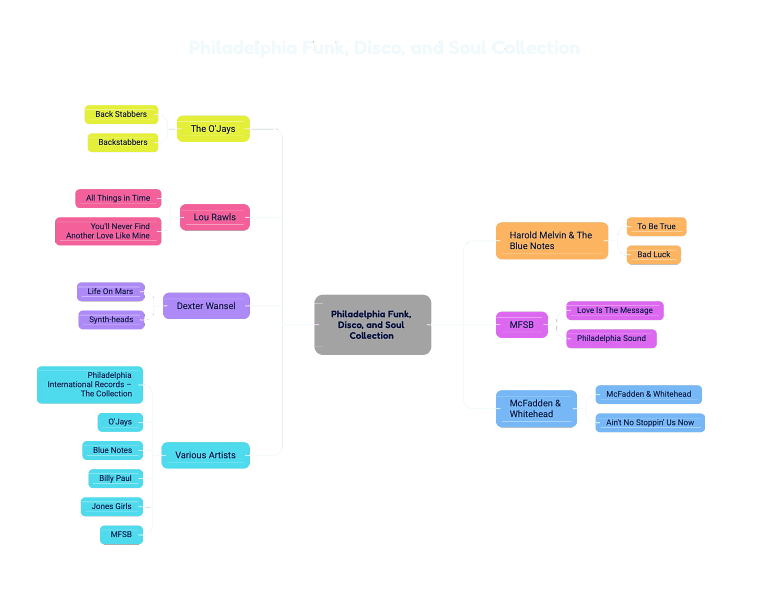
- The O’Jays – Back Stabbers (Philadelphia International, 1972) – Includes “Backstabbers” and other PIR essentials.
- Harold Melvin & The Blue Notes – To Be True – Home of “Bad Luck,” a cornerstone of disco‑soul storytelling.
- Lou Rawls – All Things in Time – Features “You’ll Never Find Another Love Like Mine,” Rawls at his smooth peak.
- MFSB – Love Is The Message – The album that crystallizes the orchestral, cinematic side of the Philadelphia Sound.
- Dexter Wansel – Life On Mars – Cosmic Philly; essential for synth‑heads and future‑funk fans.
- McFadden & Whitehead – McFadden & Whitehead – Includes “Ain’t No Stoppin’ Us Now,” a must‑own disco anthem.
- Various Artists – Philadelphia International Records – The Collection – Box set overview of PIR’s golden era, covering O’Jays, Blue Notes, Billy Paul, Jones Girls, MFSB and more.
Essential Playlists for Radio Funk Heads
Here’s how I’d structure listening journeys around these Top 10 Philadelphia Sound tracks. Think of them as conceptual playlists – perfect for Radio Funk, Mixcloud sessions, or your own crates.
- “Philly Inferno” – Dancefloor Fire
- The Trammps – “Disco Inferno”
- McFadden & Whitehead – “Ain’t No Stoppin’ Us Now”
- MFSB – “Love Is The Message”
- Harold Melvin & The Blue Notes – “Bad Luck”
- First Choice – “Let No Man Put Asunder” (Gold Mind / Salsoul extension).
- “Silk & Steel” – Love, Betrayal, and Strings
- The O’Jays – “Backstabbers”
- Lou Rawls – “You’ll Never Find Another Love Like Mine”
- Billy Paul – “Let ’Em In”
- The Three Degrees – “When Will I See You Again”
- The O’Jays – “I Love Music.”
- “Cosmic Philly” – Beyond Earth
- Dexter Wansel – “Life on Mars”
- Instant Funk – “I Got My Mind Made Up”
- MFSB – “TSOP (The Sound of Philadelphia)”
- The Jones Girls – “Nights Over Egypt”
- Teddy Pendergrass – “Get Up, Get Down, Get Funky, Get Loose.”
Use these as frameworks: swap in your own versions, edits, and remixes, but keep the Philly core intact. The idea is to walk listeners through the full emotional spectrum: celebration, struggle, romance, spirituality, and pure groove.
Turn Up the Message
It’s easy to talk about funk history, catalog hits, and trace influences. But the real magic of these Top 10 disco funk tracks from the Philadelphia Sound only hits when you actually listen – loudly, on a system that can handle the strings, the horns, and that drum stomp Earl Young gifted to the world.
Philly’s producers and musicians built something more than a style. They built a second heartbeat for the 1970s – a pulse that still runs under modern disco, soul, house, and even pop music today. From “Disco Inferno” to “Ain’t No Stoppin’ Us Now,” from “Backstabbers” to “Love Is The Message,” these records refuse to age; they just wait for another needle, another play button, another dancefloor.
So here’s the deal: don’t just read this. Go discover the music. Hit play on Radio Funk, dig for these tracks on vinyl, stream the albums, check the extended mixes on Mixcloud, and let the Philadelphia Sound rewrite your understanding of what funk, disco, and soul can be. Then, when the strings rise and the groove locks, remember this simple message:
Love is the message. Funk is the language. Radio Funk is where you come to speak it.
Articles similaires


Latest news
Now on air
Upcoming shows
Top Funk
-

1
play_arrowThe Life of the Party
-
2
play_arrowHoney Love
-
3
play_arrowI Can't Help It
-
4
play_arrow(You Were Made) Especially for Me
-
5
play_arrowDancing Machine
-