Auditeurs:
Meilleurs auditeurs :
-
play_arrow
Radio Funk : Webradio Disco, Funk, Soul and Boogie 80
-
 play_arrow
Radio Funk Live Radio Funk


When the King of Pop Met Maghreb Funk: Casablanca’s Cancelled Dream and Tunis on Fire (1996)
In Brief
Thirty years ago, Michael Jackson carried his mix of funk, disco and soul to the Maghreb, landing first in Casablanca for a highly mediatized visit and two promised stadium shows that never happened, before turning Tunis into a blazing, televised spectacle that still lives in North African collective memory.
This article retraces that journey, connects it to the wider funk history of the 1970s–80s, and shows how a single concert could crystallize global pop dreams for an entire region.
Funk, Desert Air and a Cancelled Miracle
In the mid‑1990s, the official disco era was long gone, but its DNA was everywhere: in R&B charts, in French house, in new jack swing, and of course in the late period of the King of Pop, who had grown up on Motown soul and 1970s funk.
By 1996, Michael Jackson was touring the planet with the HIStory World Tour, a blockbuster machine running across five continents and more than eighty shows.
On paper, the tour was pure stadium pop; in reality, it carried the groove logic of Off the Wall and Thriller – lush strings, deep bass lines, syncopated rhythm guitars – blown up to Olympic scale.
For North African fans, that global story suddenly became very local.
Jackson chose Morocco, and specifically Casablanca, for what was announced as his first solo concerts on African soil, scheduled at Mohammed V Stadium in September 1996.
He even flew in for a short, heavily publicized stay in July, visiting the Hassan II Mosque and touring the future venue, surrounded by tight security and ecstatic fans.
Then the dream exploded: the concerts were cancelled by the authorities, officially for security concerns, and Morocco never got its Michael night.
The story did not end there.
Barely two months later, it was Tunis, and not Casablanca, that hosted Jackson’s only North African concert, on 7 October 1996 at the El Menzah Olympic Stadium, before more than 60 000 spectators and live television cameras.
For a generation of Tunisians – and for Maghreb listeners across satellite dishes and VHS tapes – that night fused global pop spectacle with local aspirations, under the open sky of a region usually left off big tour maps.
This article takes a deep dive into that episode: the Moroccan prelude, the Tunisian climax, and the hidden threads connecting this story to the golden age of funk and disco – from Motown to Philadelphia International Records, Salsoul, SOLAR, and beyond.
It also looks at how this legacy still resonates today in contemporary artists, crate‑diggers, and online mixes circulating on platforms such as Mixcloud, where 1970s soul and 1980s funk artists continue to light up new dancefloors.
Table of Contents
- Casablanca 1996: A Funk Dream That Never Happened
- Tunis 1996: The Night the Maghreb Met HIStory
- Behind the Sound: From Motown to Philly, Salsoul and SOLAR
- Maghreb, Funk and Identity: What That Night Meant
- Echoes Today: Modern Artists and Digital Crate‑Digging
- FAQ: Michael Jackson, the Maghreb and the Funk Continuum
- Essential Discography and Playlists
Casablanca 1996: A Funk Dream That Never Happened
The King of Pop Lands in Morocco
On 21 July 1996, an airplane from South Africa touched down in Casablanca.
On board: Michael Jackson, on a 48‑hour stopover designed to promote his upcoming concerts in Morocco, which were billed as his first shows in an Arab or Muslim country.
The arrival was almost discreet from the tarmac, but everything around him was not: a large entourage, tight security handled by forces linked to King Hassan II’s bodyguard, and a Sheraton suite in Morocco’s economic capital.
From there, the visit turned into a mini‑movie.
Jackson visited the monumental Hassan II Mosque, built partly over the ocean, one of the rare mosques open to non‑Muslim visitors in Morocco.
TV footage shows him in his trademark fedora and red shirt, escorted through the mosque and greeted by traditional musicians playing Moroccan rhythms, while local teenagers shout their love for him from behind barriers.
He also inspected Mohammed V Stadium, where the two shows were planned, and reportedly took a stroll through the Habous district, Casablanca’s “new medina”, wrapped in a djellaba and sunglasses in a half‑successful attempt at anonymity.
At that moment, the narrative was set: the King of Pop meeting a North African kingdom, the global star flirting with local soul and culture.
For many Moroccan fans, especially those already in love with disco, funk and 1980s pop, this meant one thing – the sound they had bought on vinyl for years was finally coming home, in person.
The Cancelled Concerts: Security, Youth and Fear of the Crowd
The Casablanca concerts were initially announced for 27 and 29 September 1996 at Mohammed V Stadium.
Tickets sold fast and local media framed the events as historic, both culturally and economically.
But in August, less than two months after Jackson’s promotional stay, Moroccan fans were hit with a brutal reversal: the shows were cancelled.
Private TV channel 2M, relayed by MTV and Reuters, reported that “Moroccan authorities did not approve Michael Jackson’s show” and gave no official public explanation.
Speculation focused on security fears: the idea of more than 100 000 young people gathered in one place, under the banner of a Western pop superstar and surrounded by global media, may have seemed too volatile in a tense regional context.
In practice, the HIStory tour simply moved on without a Moroccan stop; Casablanca’s dream turned into a kind of ghost concert, forever present in memories without ever happening in reality.
Local press later recalled Jackson’s three days in Casablanca as an episode full of small anecdotes: a playful guest at the Sheraton, a curious visitor of the medina, a global icon trying local clothes and crafts, constantly chased – gently and not so gently – by fans and camera crews.
But for the funk and disco heads, what remained was a kind of unresolved chord: the night had been advertised, prepared, imagined; the turntables were ready, and then someone hit stop before the record even started.
A Tale of Two Stadiums: Casablanca vs. Tunis
The cancellation in Morocco did not kill the Maghreb chapter of the HIStory tour; it displaced it.
Behind the scenes, producer Tarak Ben Ammar, a Tunisian figure well connected in international media, moved quickly to secure an alternative venue in his home country.
The result was a swift re‑routing: the dates planned for Casablanca were effectively replaced by a single show in Tunis, with the same tour, the same star, and a new political and cultural backdrop.
This “tale of two stadiums” is central to understanding what happened in 1996.
On one side, a Moroccan project frozen by fears around mass youth gatherings and security; on the other, a Tunisian state willing to embrace the symbolic capital of hosting the King of Pop, and to stage it as proof of openness and modernity.
The music was the same; the politics of the dancefloor were not.
Tunis 1996: The Night the Maghreb Met HIStory
Arrival in Tunis: A Guard of Honour and a Video Message
Michael Jackson arrived at Tunis‑Carthage Airport on 6 October 1996, the day before the concert.
He was greeted not only by thousands of fans but also by a traditional guard of honour on horseback – a carefully staged combination of global pop glamour and local ceremonial codes.
Jackson’s entourage then headed to his downtown hotel, where a huge poster of his image covered the façade, turning the building itself into an ad for the show.
In the days leading up to the concert, Tunisian television broadcast a pre‑recorded message in which Jackson addressed the public directly, speaking of his joy to perform his first concert in Africa and the Arab world and praising Tunisia as a peaceful, tolerant country that values men, women and children.
He also pledged to donate the proceeds to a national solidarity fund supporting the poor, turning the event into a hybrid of pop spectacle and charity.
These elements framed the concert as more than entertainment: it was a diplomatic and symbolic moment, with Jackson as both superstar and guest of honour.
On 8 October, after the show, Jackson visited the Ennejma Ezzahra palace in Sidi Bou Saïd, home of the Center for Arab and Mediterranean Music (CMAM), which preserves Tunisian and Mediterranean musical heritage and houses a major collection of traditional instruments.
That quiet visit, away from floodlights, connected the tour’s high‑tech staging with a deeper historical continuum of music in the region.
El Menzah on Fire: Spectacle, Television and a Generation in Shock
On 7 October 1996, the El Menzah Olympic Stadium in Tunis filled with about 60 000 spectators, many of whom had waited since early in the day to secure a good spot.
It was the tenth concert of the HIStory tour and Jackson’s only show in the Maghreb; Tunis thus became the first African city to host the tour, after the Casablanca dates were scrapped.
The stadium had been extensively reconfigured with a modular stage, giant screens, sophisticated lighting and pyrotechnics, providing visuals never before seen on that scale in Tunisia.
The setlist blended tracks from HIStory with classics such as “Scream”, “They Don’t Care About Us”, “Wanna Be Startin’ Somethin’”, “Smooth Criminal”, “Billie Jean” and “Heal the World”, arranged in a tightly choreographed arc.
Choreographies were drilled to millimetre precision, with masked dancers, military‑style drills and cinematic transitions between songs.
The show was filmed and broadcast on Tunisian television, giving many people across the country access to a pop production level rarely available in local programming.
Contemporary accounts in Tunisian media describe the night as more than a concert: a huge emotional shock for a youth that suddenly saw itself addressed directly by a global superstar, in its own city, with global imagery and sound.
The combination of Jackson’s voice, the funk‑driven grooves inherited from his 1970s and 1980s work, and the visual explosion on stage created something like a collective rite of passage, particularly for those who had grown up watching bootleg VHS tapes of Motown, disco and early MTV clips.
Key Dates and Places: Morocco–Tunisia 1996
| Date | City | Country | Venue / Place | Event Status | Notes |
| 21 July 1996 | Casablanca | Morocco | Hassan II Mosque, Mohammed V Stadium | Promo visit | Jackson spends ~48 hours promoting planned concerts, visits mosque and stadium. |
| 27 & 29 Sept 1996 (planned) | Casablanca | Morocco | Mohammed V Stadium | Cancelled | Authorities do not approve shows; security concerns and fear of massive youth gathering cited. |
| 6 Oct 1996 | Tunis | Tunisia | Tunis‑Carthage Airport, Presidential Palace | Arrival | Jackson welcomed by fans and official guard; meets authorities, hotel façade covered with his image. |
| 7 Oct 1996 | Tunis | Tunisia | El Menzah Olympic Stadium | Concert | Only HIStory tour stop in North Africa, ~60 000 spectators, televised nationally. |
| 8 Oct 1996 | Sidi Bou Saïd / Tunis | Tunisia | Ennejma Ezzahra Palace (CMAM) | Cultural visit | Visit to Center for Arab and Mediterranean Music and Tunis medina before leaving for Asia. |
This table shows how quickly the narrative shifted from Casablanca to Tunis: in less than three months, the Maghreb went from expecting a Moroccan residency to witnessing a single, highly concentrated Tunisian event that absorbed all the symbolic weight of Jackson’s African stop.
A Quote That Still Resonates
Tunisian accounts often return to one particular message from Jackson, in which he explained that the concert held a special meaning because it would be his first in Africa and the Arab world, and that the proceeds would support a national fund for people in need.
Though brief, the statement framed the show as both a musical celebration and an act of solidarity, aligning global pop‑funk glamour with local social concerns.
“This concert will have a special meaning for me because it will be the first one I will give in Africa and the Arab world.”
In hindsight, the line reads like a bridge: between Detroit and Tunis, between 1970s disco strings and 1990s satellite dishes, between kids dancing on concrete in the suburbs and a star who had once been, himself, a kid singing soul on Motown 45s.
Behind the Sound: From Motown to Philly, Salsoul and SOLAR
From Jackson 5 to Off the Wall: The Funk Foundation
The 1996 Tunis concert cannot be understood without going back to the records that forged Jackson’s sound.
He emerged with the Jackson 5 on Motown, then moved with his brothers to Epic, where albums produced by Kenny Gamble & Leon Huff pushed the group towards a more mature, Philadelphia‑influenced funk.
Tracks like “Shake Your Body (Down to the Ground)” or “Blame It on the Boogie” became club staples, sitting comfortably between Earth, Wind & Fire and Chic in DJ sets.
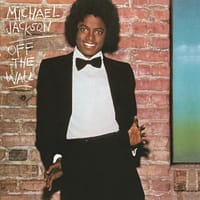
With Off the Wall in 1979, Jackson took a decisive step: his first major solo adult album, produced by Quincy Jones, blended disco, funk, pop and R&B into a sophisticated dancefloor manifesto.
Critics have described the album as crafted from disco, pop, funk and R&B, with lyrical themes of escapism and hedonism – exactly the kind of emotional vocabulary that speaks to crowded stadiums and dancefloors alike.
Songs like “Don’t Stop ’Til You Get Enough” and “Rock with You” were built on elastic grooves, prominent bass and razor‑sharp rhythm guitars, a template many later funk artists would borrow.
That fusion carried over into Thriller in 1982, which further refined the mix of post‑disco, funk, pop and rock, with tracks like “Wanna Be Startin’ Somethin’” or “Billie Jean” pushing bass‑driven groove into the global mainstream.
By the time Jackson set foot in Tunis, he was not simply a pop singer; he was the living sum of twenty years of Black American soul, funk and disco evolution.
Philadelphia International: String Sections and Social Groove
To understand the orchestrated, cinematic feel of Jackson’s live shows in the 1990s, it helps to look at Philadelphia International Records (PIR), founded in 1971 by Gamble & Huff.
PIR defined the Philly soul sound: lush strings, driving percussion, and socially conscious lyrics wrapped in sophisticated arrangements.
Its roster included The O’Jays, Harold Melvin & the Blue Notes, Billy Paul, Patti LaBelle, MFSB and others who flooded 1970s radio with hits like “Love Train” and “Me and Mrs. Jones”.
This sound, often called the “Sound of Philadelphia”, stretched soul toward disco and laid much of the groundwork for extended dance mixes and orchestral club records.
Jackson’s own Epic era intersected directly with this lineage, both through collaborations and through the general vocabulary of strings, horns and rhythm sections that his albums shared with PIR productions.
In a sense, the string lines soaring over El Menzah in 1996 were descendants of the arrangements that made MFSB and The O’Jays classics.
Salsoul and the Big‑Band Disco Funk Explosion
Another crucial piece of the puzzle is Salsoul Records and its flagship Salsoul Orchestra, a large ensemble created by Vincent Montana Jr. in the mid‑1970s.
The Salsoul Orchestra fused Philly soul, funk, Latin and disco, often featuring up to 50 musicians and delivering hits like “Tangerine”, “Nice ’N’ Naasty” and “Runaway”.
Their dense arrangements, with flamboyant strings and heavy percussion, became a template for big‑band disco and later influenced house and dance producers who sampled their work.
While Jackson did not record for Salsoul, his late‑1970s and early‑1980s records shared the same universe: expansive orchestrations, extended grooves and a willingness to treat the dancefloor as a place for both sophistication and raw physical release.
For DJs and curators, it is easy to slide from a Salsoul Orchestra cut into “Don’t Stop ’Til You Get Enough” or “Burn This Disco Out” without losing the thread.
In that sense, the Tunis show in 1996 functioned as

Articles similaires


Latest news
Now on air
Upcoming shows
Top Funk
-

1
play_arrowThe Life of the Party
-
2
play_arrowHoney Love
-
3
play_arrowI Can't Help It
-
4
play_arrow(You Were Made) Especially for Me
-
5
play_arrowDancing Machine
-