Auditeurs:
Meilleurs auditeurs :
-
play_arrow
Radio Funk : Webradio Disco, Funk, Soul and Boogie 80
-
 play_arrow
Radio Funk Live Radio Funk


In brief: cinema was Michael’s second stage. From The Wiz to Ghosts, from Disneyland 3D rides to freaky cameos in Men in Black II, his film appearances form a secret map of his relationship with funk, disco, soul… and fame itself.
Lights down, bass up: Michael, the movies and you
Close your eyes for a second.
You’re not in front of your laptop.
You’re not doom‑scrolling.
You’re in a dark theatre.
The air vibrates with that familiar low‑end hum, the kind only real funk knows how to sculpt.
On screen, a skinny scarecrow in patchwork rags starts to move with impossible precision.
The camera falls in love.
The groove locks in. And even if you don’t know it yet, you’re watching history being written in 24 frames per second.
Michael Jackson on film is not about “Oh look, the King of Pop tried acting.”
No. It’s something deeper, more twisted, more fascinating.
It’s the moment where a kid raised on Motown, obsessed with Fred Astaire, cartoons and horror movies, hijacks cinema to extend what discoand soul can do to your nervous system.
On Radio Funk, we live for that intersection.
Those crossroads where a record isn’t just music, it’s a scene.
A pose.
A frame.
And Michael understood that better than almost anyone. From The Wiz (where he meets Quincy Jones and accidentally changes the trajectory of modern black music) to Moonwalker (pure 80s excess, visuals cracked open by drum machines) and Ghosts(his most misunderstood masterwork, co‑written with Stephen King), his appearances on screen are a side‑A/side‑B of his soul.
So today, we’re talking about the films in which Michael Jackson appeared.
Not as trivia.
Not as a listicle.
As a deep dive into how cinema amplified his funk DNA, and how each movie reflects a different mask: the shy prodigy, the space captain, the ghostly maestro, the self‑aware alien joking about becoming Agent M.
Make yourself comfortable.
Maybe pour something.
Because we’re not just watching movies tonight. We’re dissecting a myth.
The Wiz – When funk, cinema and Quincy Jones collide
A Motown kid on the yellow‑brick road
Picture it: 1978. Disco is everywhere, funk is mutating, and Motown’s perfect little robot from the Jackson 5 is trying to become a grown man. The Wiz drops into this moment like a glitter‑covered UFO.
This is not your grandma’s Wizard of Oz. It’s an urban, Afro‑American reinterpretation, set in a fantasy New York, directed by Sidney Lumet, scored and supervised by Quincy Jones, with Diana Ross as Dorothy and Michael Jackson as the Scarecrow. On paper, it’s a dream: Broadway, soul, funk, cinema all fused together. In reality, the movie bombs at the box office. But let’s be clear: for us funk heads, that flop is not the point. The point is what happens on that set.
Quincy Jones tells the story often: he’s supervising the music when he starts really watching Michael. The kid in scarecrow make‑up knows every line, every lyric, every choreography… not just his own, everyone’s. The focus is scary. The hunger is obvious. And one day, Michael comes to his house and says: “I’m moving to Epic. Can you help me find a producer for my solo album?” Quincy looks at him and basically thinks: Why would I give you to someone else? That’s the moment Off the Wall is born, even if nobody knows it yet.
Musically, The Wiz soundtrack is a delicious mess of show‑tune harmonies and Broadway funk: big brass, glossy strings, rhythm guitars that wink at Sly, Parliament, and the Philly sound all at once. If you’re crate‑digging, hunt down the MCA vinyl: heavy gatefold, full orchestra credits, a real slice of late‑70s Black cinema ambition.
“I saw a depth while watching him when we did The Wiz… I’d never seen somebody that could just absorb everything like that.” — Quincy Jones
How The Wiz rewires funk history
Here’s why The Wiz matters for Radio Funk and for your personal pantheon of funk history: this is where Jackson learns to think like a film‑maker and Quincy decides to sculpt an album around that precision. You watch the Scarecrow moving and you can already see the blueprint of “Don’t Stop ’Til You Get Enough”. The looseness. The playful timing. The way he plays with the camera like it’s another dancer.
The movie may be too long, too theatrical, too 1978 for casual viewers. But underneath the excess, there’s a clear idea: Black music can be cinematic as hell and still stay groovy. That idea will explode on Off the Wall and Thriller, whose sound designs are already half‑cinema, half‑club.
For your sets, think of The Wiz as a secret prequel. The soundtrack doesn’t have the same impact on dancefloors as “Billie Jean”, sure. But it tells you where the world’s most famous funk‑powered performer learned to sync his body to a camera lens. That’s worth a needle drop.
Between video and film – Thriller, Captain EO and Moonwalker
Thriller – The short film that ate MTV
Let’s get something straight: calling Thriller “just a music video” is like calling Marvin Gaye“just a soul singer”. In 1983, Michael Jackson and director John Landis deliver a 14‑minute horror musical that screens in cinemas, complete with a pre‑show certificate announcing its “frightening themes”. The zombies, the were‑cat, the red jacket, Vincent Price’s evil laugh: everything is calibrated to feel like a proper short film, not a promotional afterthought.
Thriller changes the rules. It proves you can tell a horror story on top of a funk‑disco groove and have it dominate both MTV and theatrical screens. For us, that’s a revolution: the club track suddenly carries a narrative, and the narrative feeds back into how the track is experienced on the dancefloor. You drop “Thriller” at 1:30 a.m. and people don’t just hear beats — they see choreography in their heads.
You can also feel the seeds of Ghosts here: the love of make‑up, the dance‑with‑the‑undead, Michael turning himself into a monster to play with the public’s fears. In a way, Thriller is his first true horror‑funk manifesto.
Captain EO – Funk in outer space at Disneyland
Fast‑forward to 1986. Michael’s already detonated the pop charts twice over. Instead of chasing a classic Hollywood lead role, he signs up for a weird, expensive dream: a 3D sci‑fi musical screening exclusively at Disney theme parks.
Captain EO is directed by Francis Ford Coppola, produced by George Lucas, and stars Michael as a space‑captain who defeats an evil queen not with lasers, but with song, dance and sheer funk energy. The costumes and the creatures scream 80s, the plot is paper‑thin, but the concept is visionary: turn a theme‑park ride into a mini‑blockbuster built around one performer’s groove.
The music blends funk, rock guitar, synth‑stabs and cinematic strings; it’s the same DNA as Bad, but aimed straight at your inner 10‑year‑old who thinks dancing can literally transform the universe. For a Radio Funk mindset, Captain EO is proof that funk can live anywhere: in a club, in a spaceship, in a Disney attraction with smoke machines and moving seats.
Moonwalker – Collage, Smooth Criminal and the power of myth
Then comes 1988. MTV is practically a Michael Jackson channel, Bad is killing it, and instead of doing a normal feature film, he drops Moonwalker — a hybrid monster of a project.
Moonwalker isn’t a conventional movie. It’s an anthology: “Man in the Mirror” montage, live medleys, the freaky “Speed Demon” claymation, and, at its centre, the legendary “Smooth Criminal” segment. In that mini‑movie, Michael plays a white‑suited guardian angel fighting a drug lord (Joe Pesci) to protect a group of kids. There’s a gangster club, a big‑band jazz‑meets‑funk arrangement, machine‑gun choreography, and the now‑mythic anti‑gravity lean.
Commercially, Moonwalker becomes one of the best‑selling home video titles, racking up multi‑platinum certifications. Artistically, it cements several images: Michael as supernatural protector, Michael as human transformer (man‑to‑car‑to‑mecha), Michael as embodiment of pure groove in a hostile city.
For your shelves and your sets: the era around Moonwalker is a paradise of remixes, maxi‑singles and picture discs. Spin the extended “Smooth Criminal” into a late‑night Radio Funk mix and watch people who grew up with VHS copies of the film lose their minds.
Ghosts – Horror, allegory and the maestro on the hill
A forgotten masterpiece born in the fire
Now, let’s walk to the weirdest, darkest room in the house: Michael Jackson’s Ghosts.
Mid‑90s. Jackson is deep in controversy, attacked from all sides. At the same time, he starts an ambitious horror‑themed project around the track “Is It Scary”, initially tied to Addams Family Values. The project stalls, mutates, and finally resurfaces as Ghosts, a 39‑minute short film directed by special‑effects legend Stan Winston, co‑written with Stephen King and Mick Garris.
The plot: in the town of “Normal Valley”, an eccentric man known as the Maestro entertains children with magic and dance in a creepy mansion on the hill. A mob of angry parents arrives, led by a conservative, overweight mayor, determined to kick him out. Jackson plays both the Maestro and the Mayor, hidden under layers of prosthetics that invert racial and physical traits — the moralising politician is literally a grotesque white caricature played by the Black artist he wants to purge.
Through three main sequences set to “2 Bad”, “Is It Scary” and “Ghosts”, the Maestro unleashes illusions, skeletal transformations, demonic forms, then finally chooses to leave, leaving behind devastated children and adults who don’t know what to do with their own emptiness.
“Ghosts tells the story of an eccentric man with supernatural powers being forced out of a small town by its judgmental mayor.” — summary from Michael Jackson Wiki
So why is such a heavy‑hitting project almost forgotten? Because everything went wrong around it. Released with the Stephen King adaptation Thinner in some territories, then on LaserDisc, VHS and Video CD with almost zero push, Ghosts was too long for MTV, too weird for primetime, and completely overshadowed by the legal storms hitting Jackson at the time.
Ghosts as a funk‑horror mirror of fame
Here’s the thing: for funk, disco and soul lovers, Ghosts is essential. It’s the logical, darker sequel to Thriller — not just a zombie dance, but a full allegory about what happens when a Black artist becomes so big, so strange, that society turns him into its favourite monster.
The Maestro is Michael’s self‑portrait: isolated, misunderstood, accused of corrupting children while actually being their only source of wonder. The Mayor is the voice of tabloid morality, of small‑town “normality” that cannot handle deviation. That Jackson plays both roles is not a coincidence: he’s telling you that the persecutor and the persecuted live inside the same body. Heavy stuff for what is technically a “promo film”.
On a musical level, the tracks come from HIStory and Blood on the Dance Floor, his most industrial, paranoid, rhythmically dense period. The grooves are still firmly rooted in funk — syncopated kicks, nasty basslines — but the textures are darker, more metallic, like a paranoid cousin of the silky disco 70s strings.
And then there’s the dance. The choreography in Ghosts might be some of his hardest: sharp group formations, stomps that flirt with what would later be called krump, extended skeleton sequences animated frame by frame. Stan Winston, already a legend from sci‑fi and horror, gives Jackson the toys to literally explode his own body on screen, then rebuild it from dust.
For a Radio Funk mindset, Ghosts is a must‑screen. Play it in full between DJ sets, project it on a wall while “2 Bad” shakes the subs. It is a secret handshake between horror heads and groove addicts.
Men in Black II and Miss Cast Away – Michael, the art of the wink
Agent M – When the alien jokes about being alien
Jump cut to 2002: Men in Black II. Big studio sci‑fi comedy. Aliens, Will Smith, Tommy Lee Jones, one of the most mainstream franchises possible. And who pops up on a giant screen at Men in Black HQ? Michael Jackson, in full suit and tie, calling from what looks like Antarctica, surrounded by penguins.
He’s credited as “Agent M”. In the scene, he reports that an alien treaty has been signed, then starts begging his boss Zed for a full‑time position in the Men in Black organisation. Zed brushes him off, claiming he’s “still working on the alien affirmative action program”, and Michael, panicking, insists: “I could be Agent M!”
It’s short, it’s silly, it’s perfect.
Behind the scenes, fan and production sources say Jackson actually asked for the cameo himself because he loved the first film and called Will Smith to make it happen. He shot his scene on blue‑screen with director Barry Sonnenfeld coaching him. For once, he’s not the auteur, the tortured genius, the misunderstood maestro. He’s just having fun with his own reputation as the ultimate alien.
For us, that’s gold. After decades of the press painting him as weird, inhuman, otherworldly, Michael finally leans into the joke and plays it his way.
Miss Cast Away and the Island Girls – The bargain‑bin oddity
Two years later comes a much stranger creature: Miss Cast Away and the Island Girls, a low‑budget parody directed by Bryan Michael Stoller. Think cheap gags, beauty pageant spoof, Cast Away references, random pop‑culture chaos. In the middle of that chaos: Michael Jackson as “Agent M.J.”, another wink at the Men in Black vibe.
The movie never had a real theatrical life. It floated around cable, then ended up where it always belonged: in bargain bins and late‑night curiosity streams. But for Jackson completists and for the kind of vinyl hunter who grabs every promo 12″ with his name on it, the DVD is a fun artifact.
From a serious funk history perspective, let’s be honest: Miss Cast Away doesn’t change anything. But symbolically, it shows something important: even in a turbulent, fragile era of his life, he’s still willing to show up in tiny, random projects, to play a caricature of himself, to be the weird cameo that makes you rewind. That playfulness matters. It reminds you there’s humour under all that tragedy.
This Is It – The last rehearsal, the last screen
Documentary born from absence
-
Michael Jackson is preparing This Is It, a massive run of comeback/farewell shows at London’s O2 Arena. Rehearsals are filmed for internal use: references, documentation, nothing more. Then, suddenly, he dies. The tapes become something else. Director Kenny Ortega assembles them into Michael Jackson’s This Is It, released in theatres worldwide a few months later.
What you see on screen is not the polished spectacle but the work in progress: Michael in hoodie and sunglasses, stopping a song to talk to the band, adjusting tempos, discussing arrangements, pushing dancers to hit sharper, softer, deeper. He is frail at times, but the ears? Razor sharp. The groove? Intact.
The film becomes a box‑office hit and, for fans, a complex experience. You’re watching a ghost building a show you’ll never see completed. But you’re also watching him in his purest environment: rehearsal, where ego is supposed to step back and let craft speak.
This Is It as funk masterclass
For our Radio Funk community, This Is It is a goldmine. You hear him break down “Wanna Be Startin’ Somethin’”, tweak the intro, ask for more attack on the horns. You see him rehearse “Billie Jean” not as a nostalgia act but as a living organism whose groove can still be improved. Behind every hit, there’s a nerd obsessed with hi‑hat placement.
Compared to Ghosts or Moonwalker, This Is It is visually simple: no elaborate storyline, no prosthetic nightmares, no spaceships. But emotionally, it might be his most potent film. Because it closes the loop that started with The Wiz: young Michael, hyper‑professional on a film set, being spotted by Quincy for his discipline; older Michael, still drilling details, still demanding excellence, but now carrying the weight of decades.
You want to understand why his disco, funk and soul records still hit so hard? Watch how he treats rehearsal as sacred. Then go back to your own sessions, your own mixes, your own crate‑digging. It raises the bar.
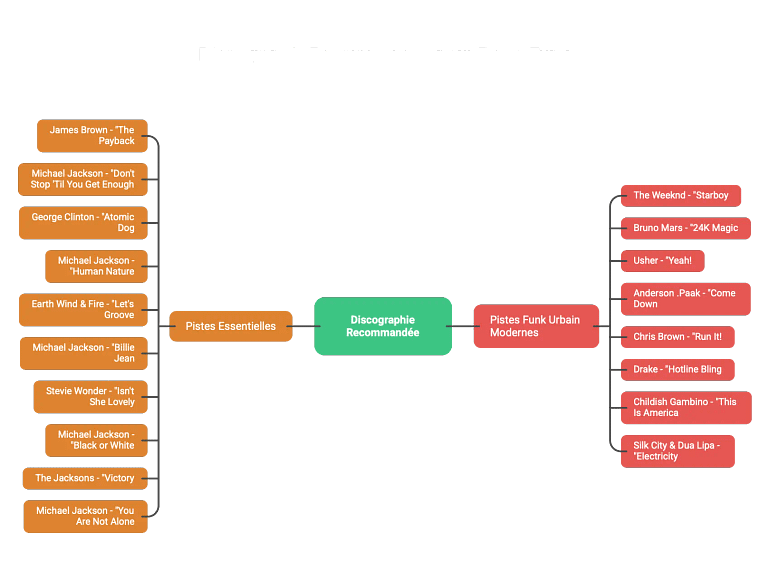
Essential discography – Records to spin after watching the films
You’ve watched the movies, or at least you’ve replayed them in your mind while reading. Now it’s time to put the needle down. Here’s a curated discography linked to Michael’s film appearances, perfect for Radio Funk rotations, DJ sets and late‑night listening.
Around The Wiz
-
Original Motion Picture Soundtrack – The Wiz* (MCA): lush orchestral funk with Quincy Jones at the controls. Listen to the arrangements; you can hear his future work with Michael warming up.
-
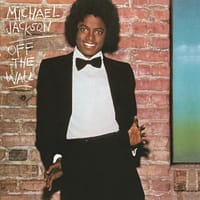
Michael Jackson – Off the Wall* (Epic): not a film soundtrack, but the direct child of The Wiz encounter. Essential disco‑funk blueprint.
Thriller and horror‑funk
-
Michael Jackson – Thriller* (Epic): obviously. Spin the title track back‑to‑back with “Billie Jean” and “Beat It” to feel the full cinematic arc.
-
Various – 80s horror soundtracks: to mix around Thriller and Ghosts if you’re building a horror‑funk night.
Captain EO and space‑funk
-
Michael Jackson – “Another Part of Me” / “We Are Here to Change the World”(singles/compilations): tracks associated with Captain EO and its era.
-
Michael Jackson – Bad*: the album that shares the same futuristic, sharp production aesthetic.
Moonwalker and late‑80s myth
-
Michael Jackson – Bad (Special editions) with extended “Smooth Criminal” versions.
-
Official Moonwalker video release (wherever you can legally find it) to cross‑reference images and mixes.
Ghosts and the darker groove
-
Michael Jackson – HIStory: Past, Present and Future, Book I*: especially disc 2 for the new material.
-
Michael Jackson – Blood on the Dance Floor: HIStory in the Mix*: remixes plus original tracks “Ghosts”, “Is It Scary” and “Morphine”. Industrial funk, ahead of its time.
This Is It and legacy
-
Michael Jackson – This Is It (Soundtrack): includes rehearsal‑style takes and a few posthumous additions.
-
Live releases – especially Live in Bucharest: The Dangerous Tour for a taste of full‑blown stage narrative.
-

discographie michael jackson collaborations artistiques majeures visual selection
Essential playlists – From screen to Radio Funk stream
You run a funk‑obsessed webradio or you’re that friend whose playlists always hit? Here are some themed journeys you can create around Michael’s film work.
1. Funk & film – The Wiz to Moonwalker
-
Cuts from The Wiz OST
-
“Don’t Stop ’Til You Get Enough”
-
“Rock with You”
-
“Billie Jean”
-
“Thriller”
-
Captain EO‑era tracks (“Another Part of Me”)
-
“Bad”
-
“Smooth Criminal” (album + extended mix)
Goal: chart the evolution from Broadway funk experiments to full‑blown cinematic pop.
2. Horror groove – Thriller meets Ghosts
-
“Thriller”
-
“Is It Scary”
-
“2 Bad”
-
“Ghosts”
-
Selected HIStory cuts (“Scream”, “Tabloid Junkie”)
-
Darker funk cuts from other artists:
-
Rick James – “Ghetto Life”
-
Cameo – “She’s Strange”
-
Goal: explore the line between groove and unease, between dancefloor and nightmare.
3. Agent M – The alien soul of Michael
-
“Stranger in Moscow”
-
“Human Nature”
-
“Who Is It”
-
“Leave Me Alone”
-
“Morphine”
-
“Man in the Mirror”
Goal: soundtrack to rewatching his Men in Black II cameo, immersing yourself in the feeling of a soul too big for one body, one planet.
Drop any of these into your Radio Funk rotations, shout out the film connections on air, and you turn passive listeners into active cine‑groove archaeologists.
FAQ – Michael Jackson, cinema and funk history
Did Michael Jackson appear in many films?
Not really, not in the conventional actor sense. He has one major feature role in The Wiz, the hybrid anthology Moonwalker, several ambitious narrative shorts like Thriller and Ghosts, plus cameos in movies such as Men in Black II and Miss Cast Away and the Island Girls. But if you add concert films and documentaries like This Is It, his on‑screen footprint becomes much bigger.
Which film is most important for funk and disco fans?
It depends what you’re hunting.
-
Historically: The Wiz is crucial, because it leads directly to the Michael‑Quincy alliance that reshapes disco and funk on Off the Wall and Thriller.
-
Visually: Thriller rewrites the rules of music video as short film.
-
For deep cuts: Ghosts is the true cult piece, where horror imagery and industrial funk collide.
Why is Ghosts so underrated?
Because it arrived at the wrong time, in the wrong format. Initially tied to “Is It Scary”, it morphed into a 39‑minute short released as a companion to Thinner, then dumped onto niche formats like LaserDisc, VHS and Video CD. Too long for standard TV, too weird for mainstream marketing, and overshadowed by the scandals of the mid‑90s, it slowly became a hidden gem only hardcore fans and horror‑funk freaks talked about.
What’s the deal with his Men in Black II cameo?
It’s short but iconic. Michael appears on a screen in HQ, apparently broadcasting from Antarctica, reporting on aliens and begging to officially join the Men in Black. Behind the scenes, he reportedly asked Will Smith for the cameo because he loved the first movie. It’s one of the rare times he openly plays with his public image as “the alien”, turning decades of weird headlines into a punchline he controls.
How do these films change the way we hear his music?
Once you’ve seen (or re‑seen) these films, the tracks stop being “just songs”. “Smooth Criminal” carries the memory of the club shoot‑out in Moonwalker. “Ghosts” echoes with the Maestro’s exile. “Another Part of Me” smells of Disneyland smoke machines. “Thriller” will forever be a mini‑movie in your head. For a Radio Funk curator, that’s powerful fuel: you’re not just playing records, you’re projecting scenes in people’s memories.
Lights up, faders up: discover (again) the music
Here’s the truth: Michael Jackson didn’t need cinema. The records alone would have been enough to etch his name into funk and disco history. But he wanted more. He wanted to dance with cameras, with monsters, with spaceships, with penguins in Antarctica.
From the Scarecrow of The Wiz to the bone‑cracking skeleton of Ghosts, from the space captain of Captain EO to the nearly‑finished perfectionist of This Is It, his film appearances trace a line that runs parallel to his albums — sometimes playful, sometimes tragic, always obsessed with one thing: transforming sound into image and image back into sound.
If you love funk, disco and soul, these films are not side notes. They’re part of the story. Part of the groove. Part of what makes dropping “Billie Jean” at the right moment still feel like opening a portal.
So here’s the call to action.
Rewatch The Wiz. Hunt down Moonwalker. Screen Ghosts at home or with friends. Laugh again at Agent M begging for his job in Men in Black II. Let This Is It break your heart and sharpen your ears. Then, when you’re done, come back to Radio Funk.
Turn it up.
Let the bass talk.
And remember: every time that snare hits, somewhere, Michael’s ghost is still hitting the mark on the one.
Articles similaires


Latest news
Now on air
Upcoming shows
Top Funk
-

1
play_arrowThe Life of the Party
-
2
play_arrowHoney Love
-
3
play_arrowI Can't Help It
-
4
play_arrow(You Were Made) Especially for Me
-
5
play_arrowDancing Machine
-